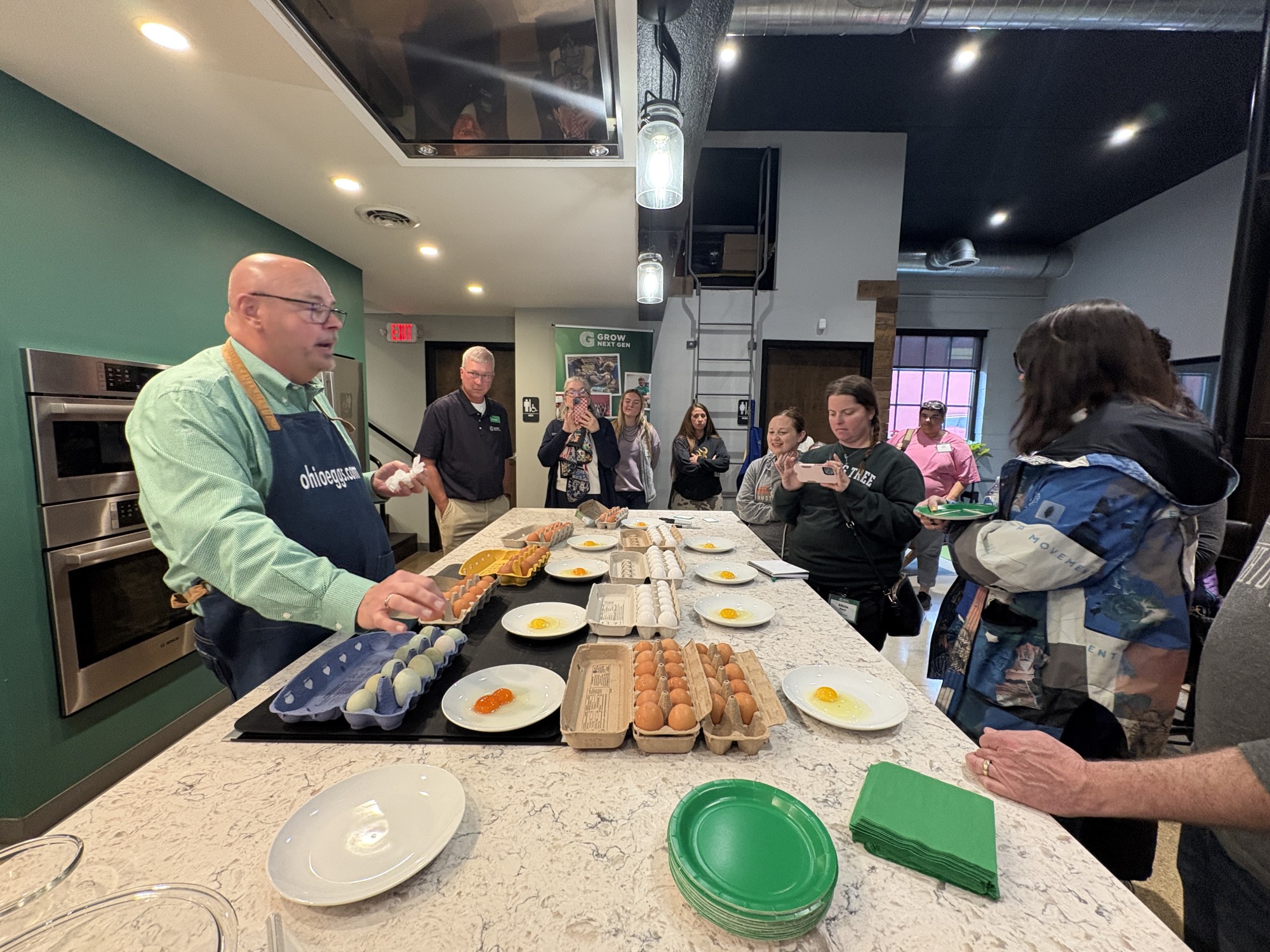
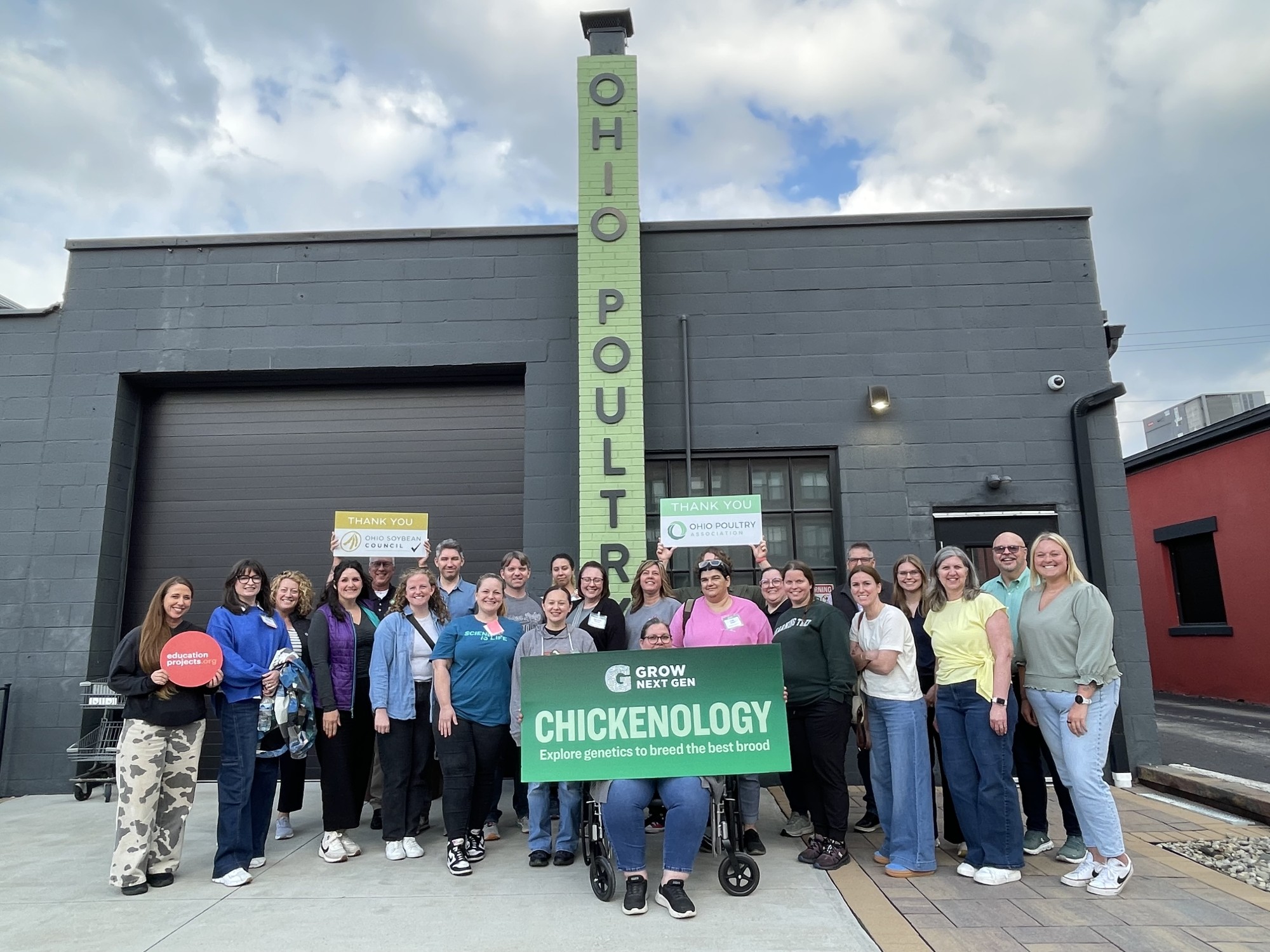
Students spend the year learning DNA, proteins, pathogens, and ecosystems. They rarely see that those same concepts shape the food on their plates. Katy Wright, a biology teacher at Global Impact STEM Academy, came to a GrowNextGen Chickenology workshop and found ways to close that gap.
“Thinking about how I can connect some of the biology concepts I have to teach my kids to these real-world applications has been really interesting,” she says.
Making abstract biology concrete
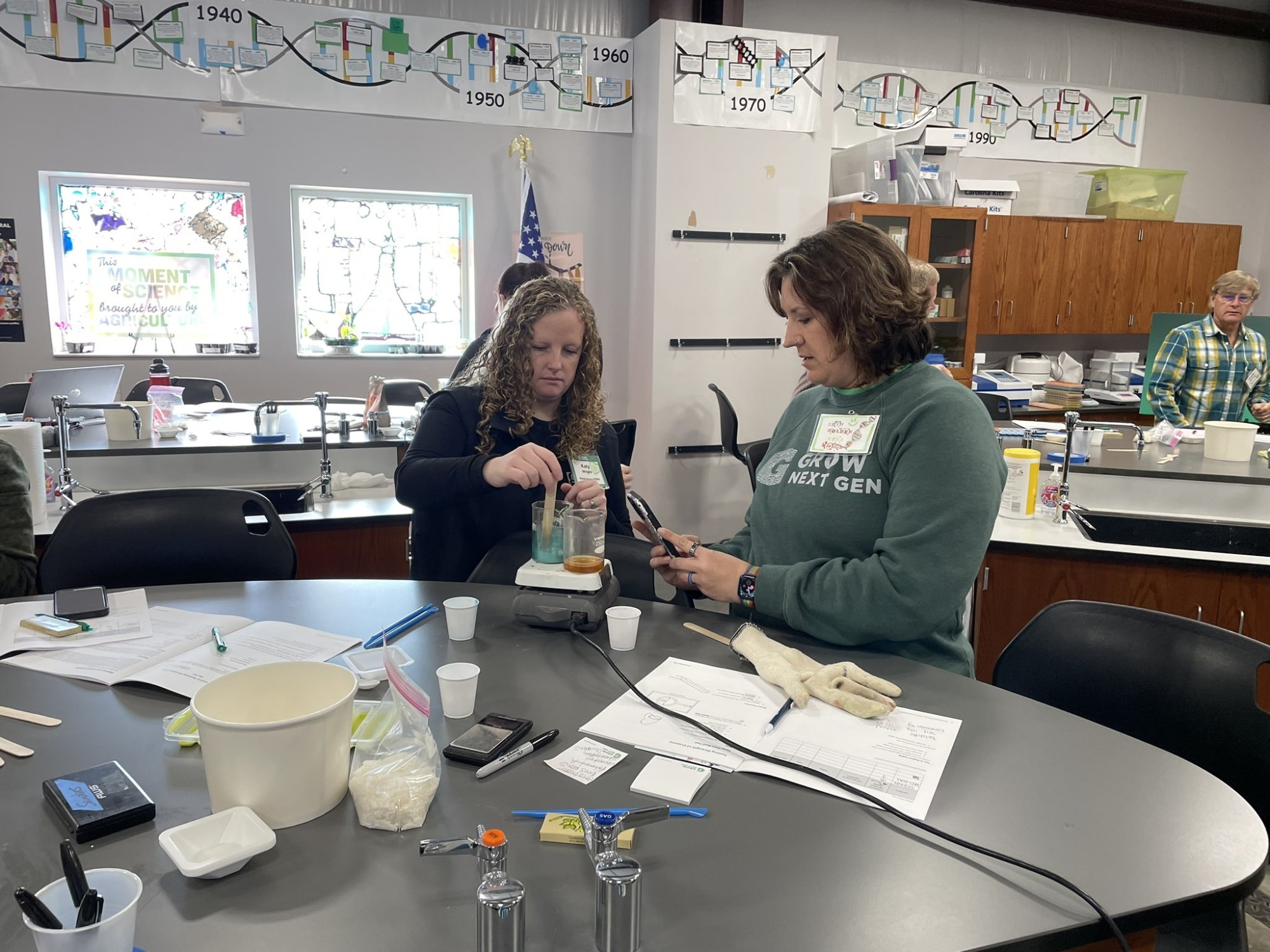
Cellular processes are hard to picture. At the workshop, Wright tried a lesson where teachers walked through them: travel to a designated “nucleus” for DNA, then move to “ribosomes” for protein synthesis. The room becomes the cell. It’s a lesson she plans to bring back to her students.
“I really liked the hands-on interactive elements that get students moving and help ingrain the biology concepts because it mimics what actually happens in the cell,” Wright says.
Connecting biology to the food system
Chickens work as a steady reference point across units. Genetics, immunity, microbiology, and ecology all live in a poultry barn. Biosecurity protocols and the science behind avian influenza can turn the news into lab discussions, something Wright hadn’t fully appreciated before the workshop.
“It’s easy to take it for granted or be unaware of how much science and technology goes into all of it,” she says.
Showing students more STEM career possibilities
Many students picture one job when they hear agriculture: farming. The workshop walked Wright through everything else a single carton of eggs touches. The driver hauling feed to the barn. The crew sanitizing trucks to keep pathogens out. The mechanics keeping ventilation and conveyor systems running. The ag tech specialists monitoring flock health data. The processing technicians grading and packaging eggs. The software engineers building the systems that hold it all together.
“It’s not all traditional farming,” Wright says. “Showing students the full process, from the biology of the chickens to the production systems, can help open their eyes to all the different opportunities and the need for those careers.”
Use GrowNextGen career resources to help students explore the science, technology, and problem-solving behind today’s agriculture. Visit grownextgen.org/careers.
Share this