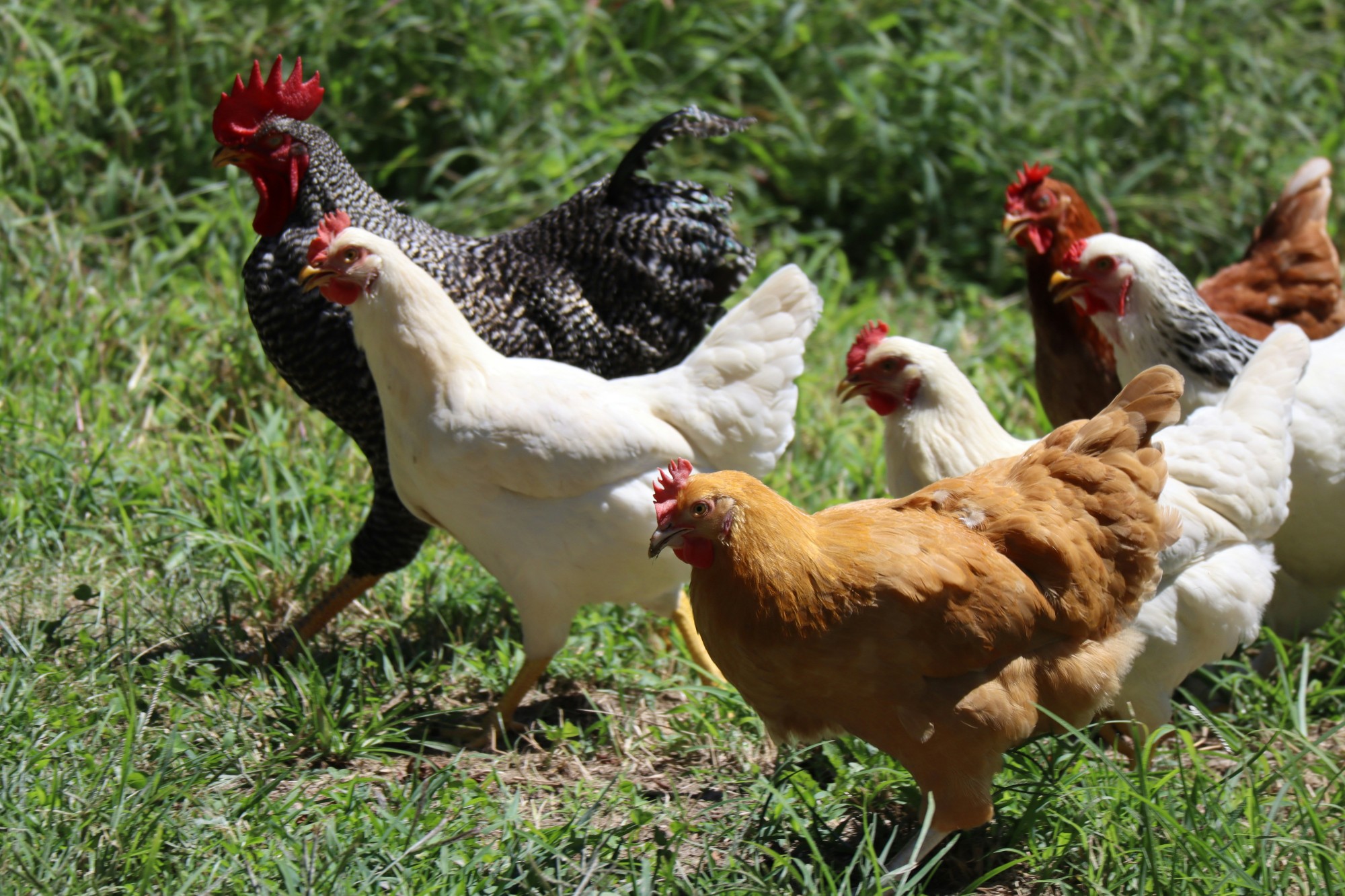
Biodiversity and interdependence: Chickenology (high school)
How does biodiversity impact traits in chickens? How might we protect flocks from disease?
Chickens face many of the same threats as wild species, and keeping flocks healthy feeds a lot of people. These lessons use chickens to explore biodiversity and disease prevention through a model tied to Ohio’s food supply and the careers behind it. Students will solve an avian flu mystery, decoding clues to find the barn, worker, and chicken behind the outbreak and the biosecurity lapses that let it spread, compete for food using spoons, chopsticks, and forceps as beaks to see which traits survive and, calculate Simpson’s Index of Diversity to measure how the “ecosystem” changed See teacher background →
Lessons
# Biosecurity
How do we use biosecurity to keep chickens safe? Students learn through this simulation how to recognize the early signs of disease and how to prevent them from spreading using biosecurity measures.
Files
# Biodiversity
Students observe how inherited traits impact survival through a simulation and use Simpson’s Index of Diversity to quantify the change of diversity within an ecosystem.
Files
Teacher background
Middle school Science and high school Biology teachers often use exotic animals as examples when discussing natural selection, biodiversity and threats to biodiversity. However, our food supply is subject to many of the same issues. Consumers, farmers, and other agriculture workers have a large impact on the food supply, and they use the same science and biology concepts to make sure they can produce food to feed a large population. Discussing livestock helps students learn about the many jobs and careers in the food production industries.
This set of lessons encompass the basics of biodiversity and biosecurity, using chickens as a model. Chickens are the number one consumer of soybeans. Ohio ranks number two in egg production and sixteenth in chicken meat production in the United States. Students who participate in these lessons and activities will discover how many people are at work to provide us with healthy food from poultry and how this gets done.
These lessons resulted from a desire to continue the animal science interest that began many years ago when 4H extension created the ChickQuest program. Since then, Chickenology: Explore genetics to breed the best brood [https://extensionpubs.osu.edu/chickenology/] for middle school science has been published. This curriculum does not include information on hatching chicks. This set of lessons helps Biology teachers meet standards using animal livestock.

Next gen science standards
Science and engineering practices
- Developing and using models
- Analyzing and interpreting data
- Using mathematics and computational thinking
- Obtaining, evaluating, and communicating information
Crosscutting concepts
- Cause and effect
- Systems and system models
- Structure and function
- Stability and change
Disciplinary core ideas/content
- ESS3C Human impacts on Earth systems
- LS1B Growth and development of organisms
- LS2A Interdependent relationships in ecosystems
- LS2C Ecosystem dynamics, functioning and resilience
- LS3A Inheritance of traits
- LS3B Variations of traits
- LS4B Natural selection
- LS4A Evidence of common ancestry and diversity
- LS4C Adaptation
Curriculum authors

Amanda Nothstine
7th and 8th grade science teacher at Springboro Junior High

Jeff Jostpille
Biology, Anatomy, Environmental Science, Botany, Zoology, 8th Grade Science teacher at Fort Jennings High School

Heather Bryan
Former Environmental Science Teacher and Education Consultant at Education Projects & Partnerships
Share this